
Clean pruning starts with choosing the right garden cutting tool. A well-suited hand saw can make all the difference when working with thicker branches.
Healthy trees and shrubs depend on proper care and regular pruning. While watering, feeding and trimming are part of garden maintenance, growth becomes more challenging as plants mature.
Whether shaping fruit trees or clearing dense shrubs, selecting the appropriate pruning saw helps you work more accurately.
What to Consider When Selecting a Hand Saw

When choosing a quality hand saw, a few key factors influence how well it will perform during pruning:
1. Branch Thickness
Larger branches require a saw that cuts through wood efficiently without excessive effort. Both blade length and tooth configuration play a role here.
2. Working Position
If you are pruning at height or reaching into dense growth, a saw that offers good control in tighter or awkward spaces will make the task easier.
3. Frequency of Use
For occasional pruning, a compact and easy-to-store saw may be more practical. For regular garden maintenance, a more robust design will provide better durability and consistency.
With the right saw, each cut feels stable and controlled, helping you work efficiently while maintaining the plant’s natural shape.
Handling Thicker Branches in the Garden
For larger branches, a hand saw, often called a branch saw, lets you handle thicker branches with better control. The toothed blade moves through denser wood smoothly and helps maintain precision.
You may find a saw especially useful when:
- Removing mature branches: Established trees often develop thicker limbs that require a saw with sufficient cutting strength.
- Cutting dead wood: Dry, hardened branches are difficult to remove with pruners and can damage smaller tools.
- Thinning dense shrubs: Interior growth can become tightly packed, making a saw more effective for selective removal.
- Clearing obstructing branches: Limbs that block walkways or structures are often too thick for compact pruning tools.
A controlled saw cut reduces bark tearing when pruning living branches. This helps plants heal more quickly and lowers the chance of disease entering the exposed cut.
Choosing the Right Tool for Branch Thickness
The best pruning tool often depends on the branch thickness. Smaller stems are easily trimmed with side-cutting secateurs, for example, the Pruner Pro P90, while medium growth is better handled with loppers.
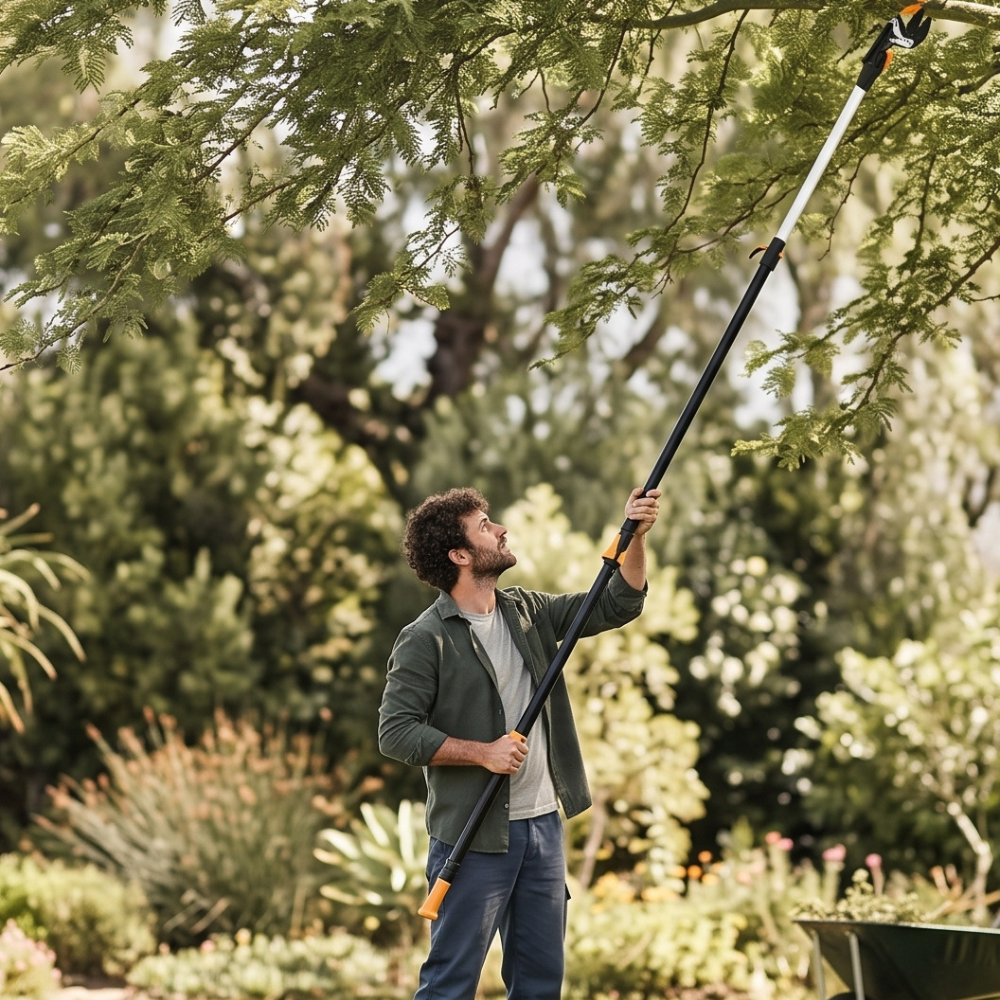
Thicker wood is most effectively removed with a manual saw, while a tree pruner, such as the Fiskars PowerGear™ X Telescopic Tree Pruner UPX86, can help you reach higher branches safely.
Each tool is designed for a specific cutting range, helping you achieve cleaner pruning results:
| Branch Thickness | Recommended Tool | Why It Works |
|---|---|---|
| Up to 25–30 mm | Hand pruners | Ideal for trimming stems and light pruning |
| 30–50 mm | Loppers | Longer handles provide greater cutting leverage |
| 50 mm and above | Hand saw | Toothed blade cuts thicker wood efficiently |
Trying to cut thick branches with pruners can strain your hands and crush plant tissue. When branches become too large for loppers, a hand saw becomes the safer option.
Blade Design and Cutting Performance
Blade design plays an important role in how easily thicker wood can be cut. Tooth shape, blade length and cutting direction influence how smoothly the tool performs during pruning.
Tools such as the Fiskars Plus Folding Saw SW68 feature teeth patterns designed for efficient pruning of thicker branches.
How Tooth Design Affects Pruning Control
Many modern pruning blades are designed to cut on the pull stroke rather than the push stroke. This allows you to guide the blade with greater control while using less effort.
Benefits of pull-cut blades include:
- Smoother cutting action: Teeth slice through green wood more efficiently with less resistance.
- Reduced arm strain: Pull strokes use natural body movement, lowering fatigue during longer tasks.
- Cleaner branch surfaces: Controlled cutting produces smoother cuts, helping plants recover faster.
When you are pruning inside dense shrubs or working at awkward angles, pull-cut blades make the task easier and more controlled.
Types of Garden Saws and When to Use Them
Each style serves a specific pruning purpose, from light trimming to the removal of thicker branches on mature plants.
The best choice depends on how often you prune and the size of the branches you need to remove:
| Saw Type | Best Use | Key Advantage |
|---|---|---|
| Folding Saw | Light pruning and portable use | Compact and safe to carry |
| Fixed Blade Saw | Frequent cutting of thick branches | Stable and durable |
| Curved Blade Saw | Cutting overhead or above shoulder height | Faster cutting motion |
Matching the saw to the task helps you cut more effectively while working comfortably across different areas of the garden.
Features for Demanding Garden Conditions

The design features of a manual saw can make a noticeable difference when pruning shrubs or trees. Elements such as handle grip, blade protection and durable materials improve comfort and usability.
1. Handle Grip and Control
A well-designed handle helps maintain control throughout each cut. Textured grips reduce slipping and keep the tool stable.
2. Blade Protection and Storage
Many pruning saws include folding mechanisms or protective sheaths. These features protect the blade and improve safety when not in use.
3. Durable Construction
Garden tools are regularly exposed to moisture, sap and changing outdoor conditions. Hardened steel blades with corrosion resistance help extend the tool’s lifespan.
Why Clean Cuts Matter for Plant Health
The way you remove branches can influence how well a plant recovers after pruning.
A sharp blade produces smooth cuts that support healthy regrowth and maintain the plant’s natural form, which is especially important when pruning fruit trees or ornamental plants.
Keeping the blade clean and dry helps maintain performance. Removing sap and moisture prevents buildup and corrosion, while occasional inspection ensures the tool continues to cut efficiently.
Neatly removed branches also improve the garden's overall appearance by helping plants maintain their natural shape.
Choose Fiskars Hand Saws for Confident Garden Pruning
Tackle thicker branches with confidence and get cleaner, smoother cuts without the struggle. The right-hand saw helps you stay in control, reduce effort, and keep your garden looking its best.
Ready to make pruning simpler? Explore the Fiskars Saw Range and find the hand saw that works for you.