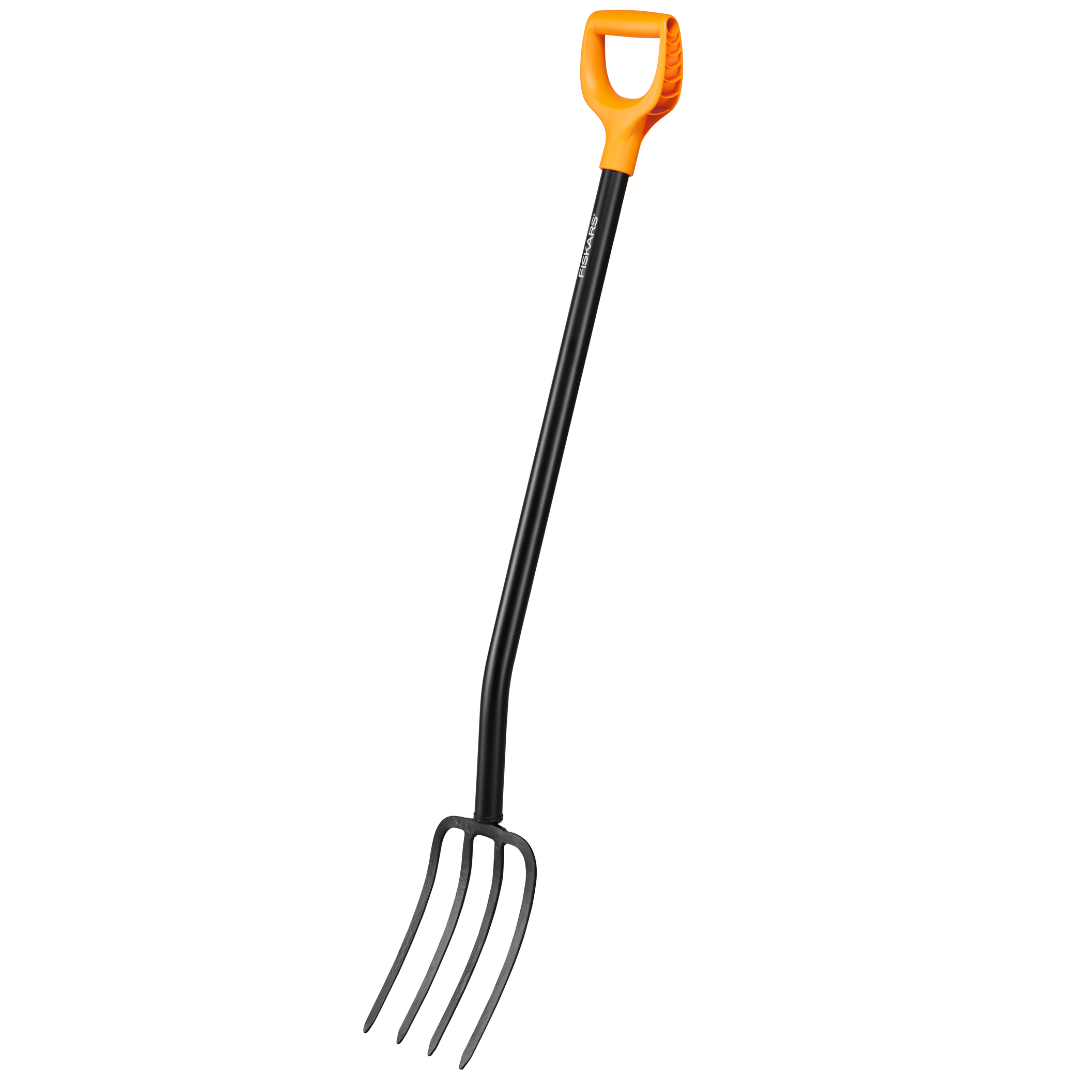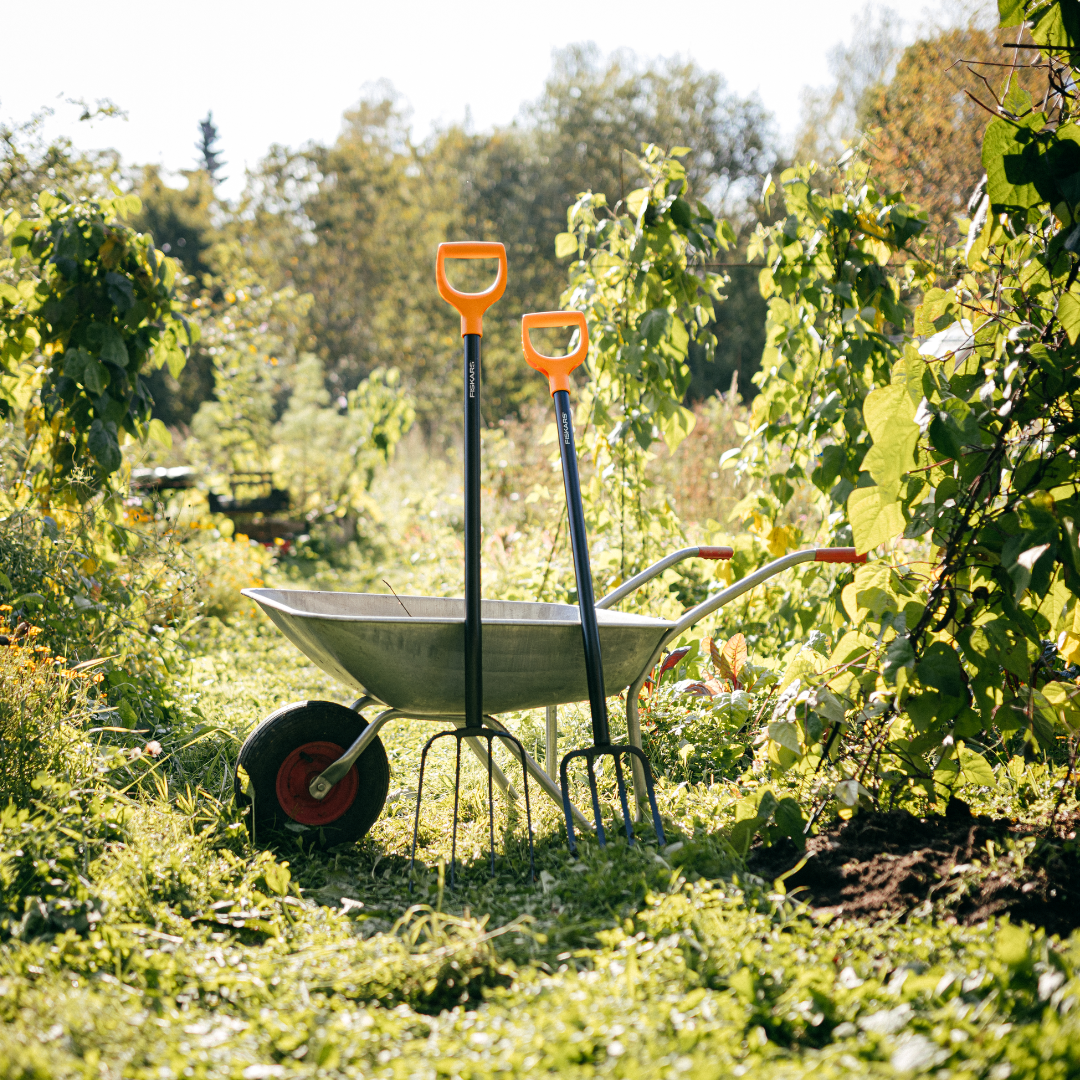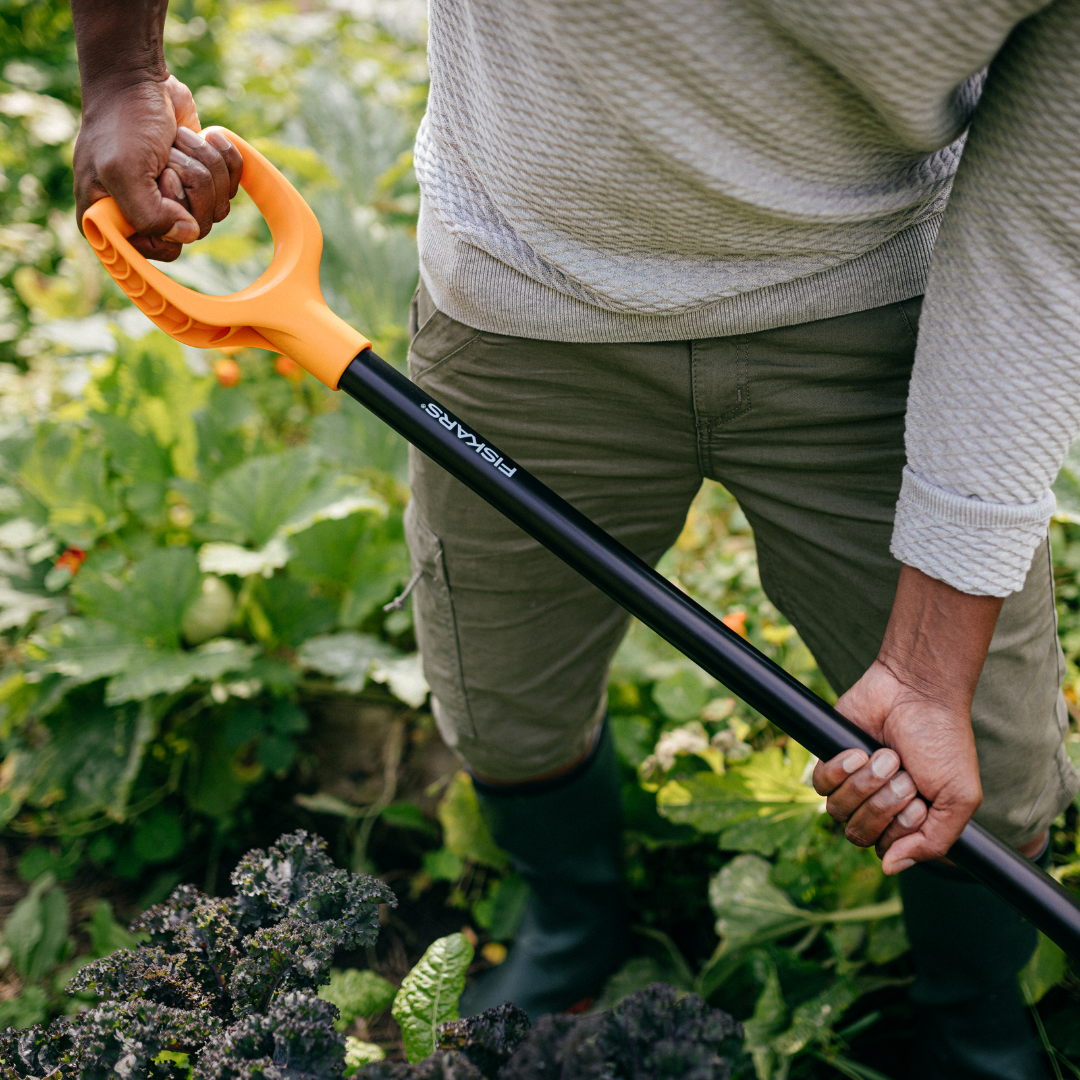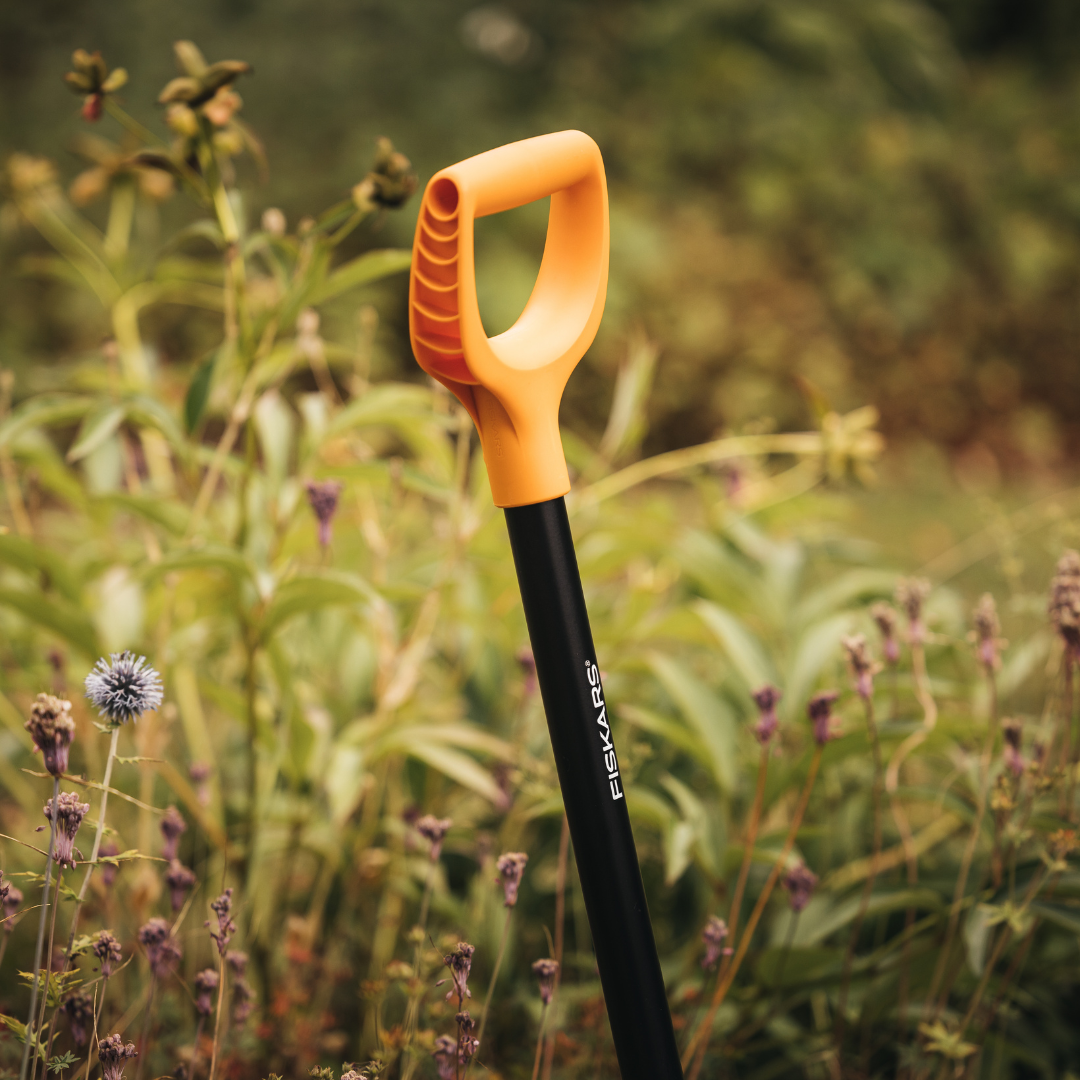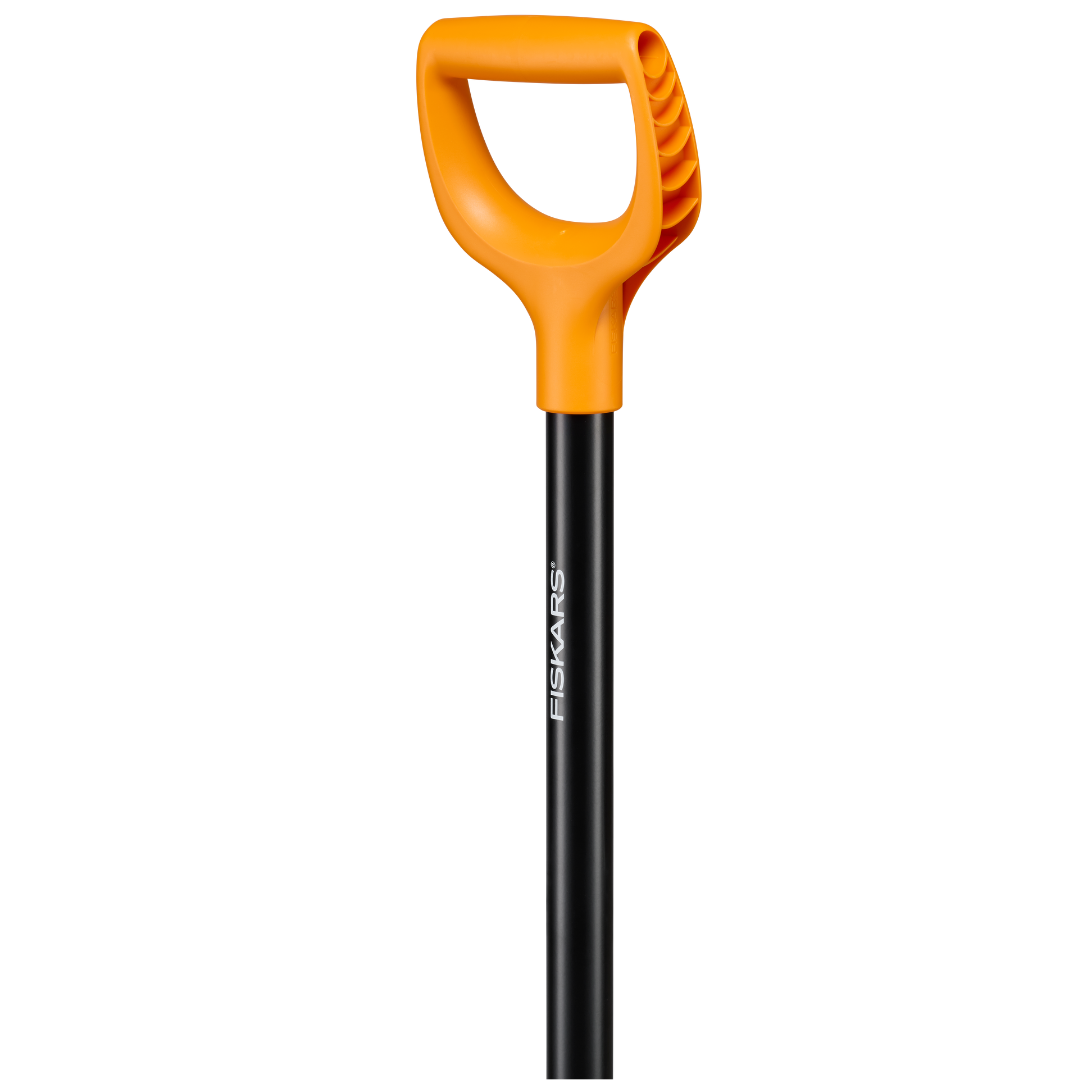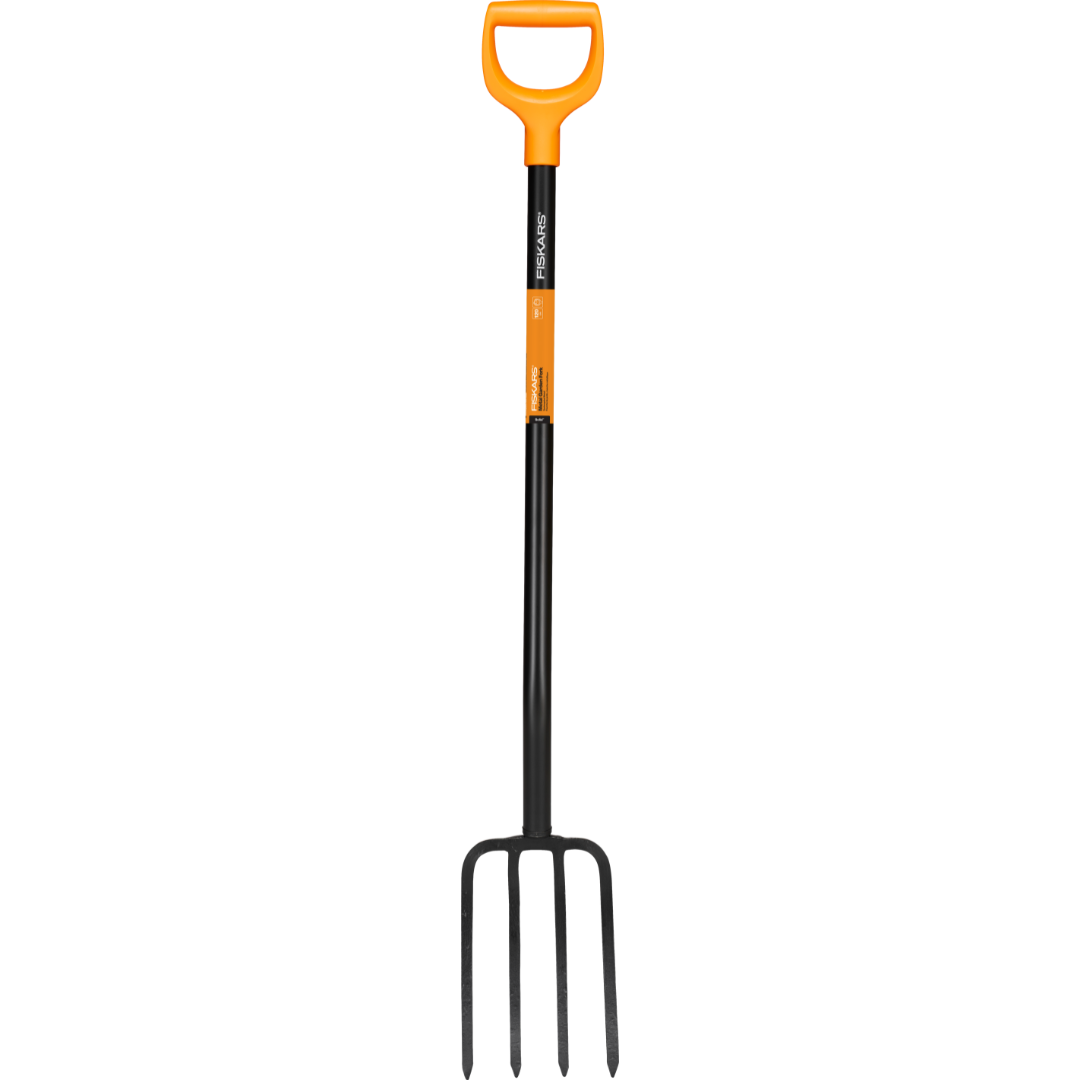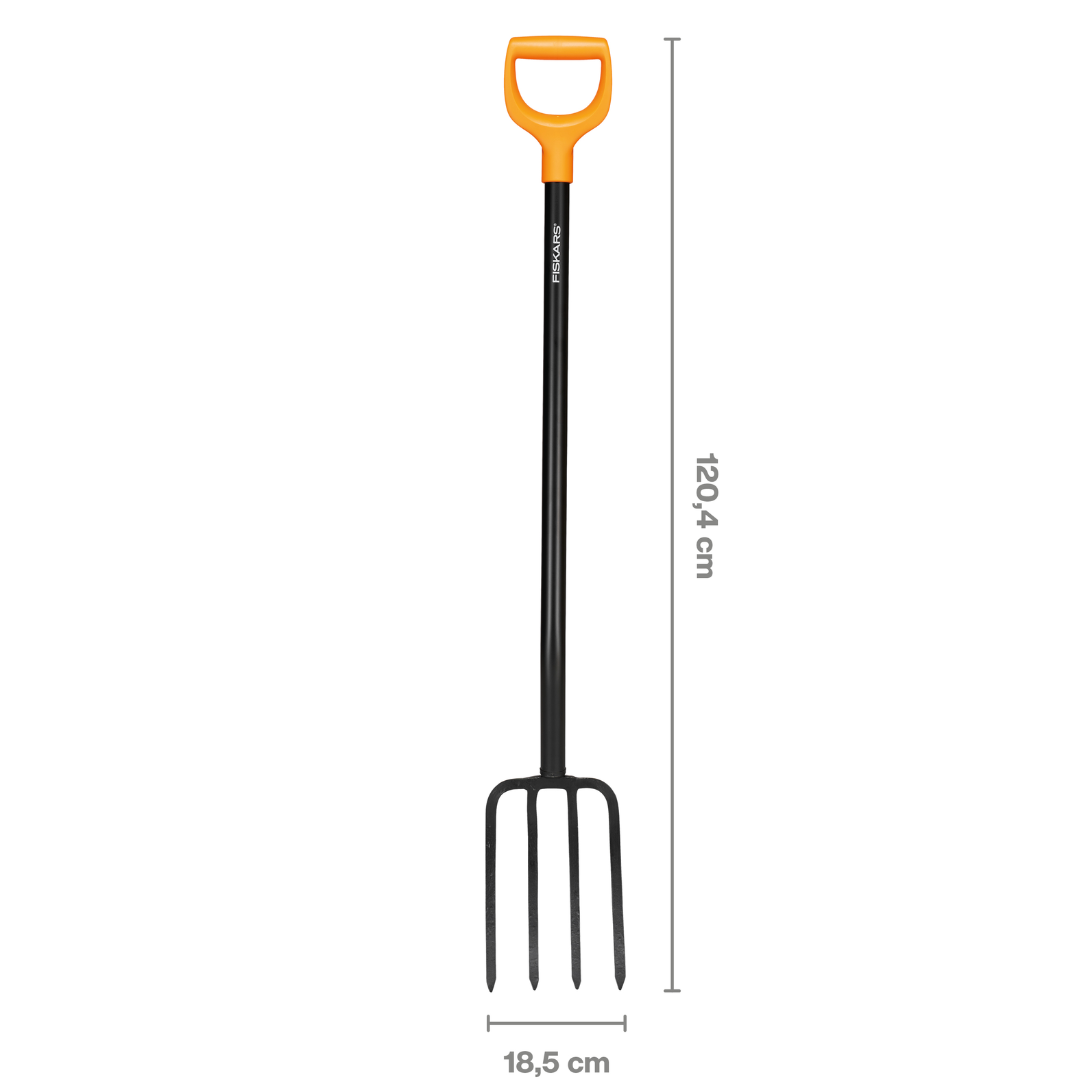
A dependable garden fork helps loosen compacted ground, turn soil and prepare beds before planting. Fiskars garden forks combine strong construction with rigid tines for controlled, effective work around the garden.
A garden fork is designed to loosen, lift and turn soil without relying on a wide cutting blade. Its strong tines can enter firm ground, break apart compacted sections and create better growing conditions in beds, borders and vegetable gardens.
This versatile fork garden tool can also be used to mix compost into the ground, lift root crops and move loose garden materials. Smaller planting and maintenance jobs can be completed with additional hand tools for garden care.
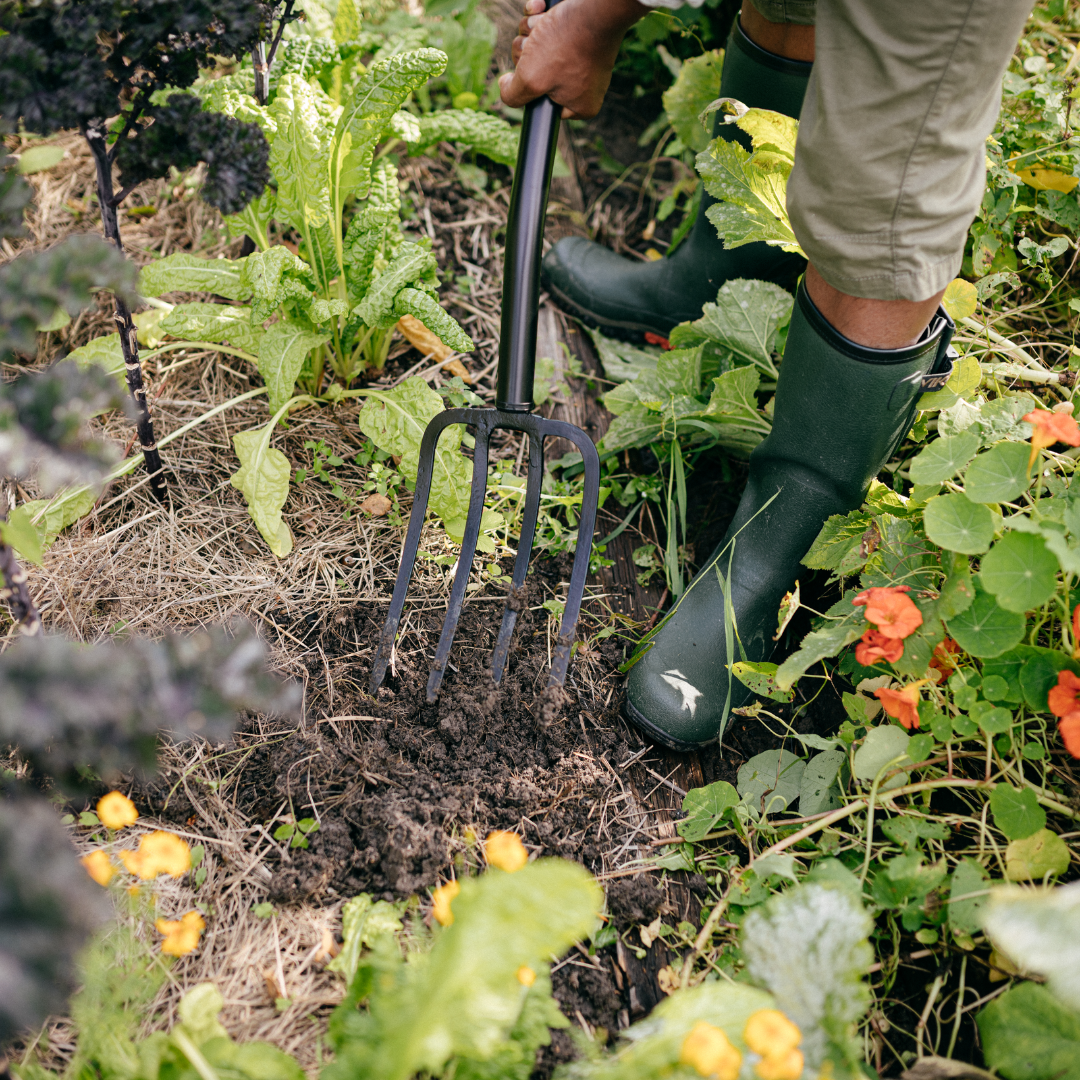
A digging fork is especially useful when soil has become firm, heavy or difficult to work with a spade. The tines penetrate the ground and help separate compacted areas, allowing the soil to be lifted and loosened more gradually.
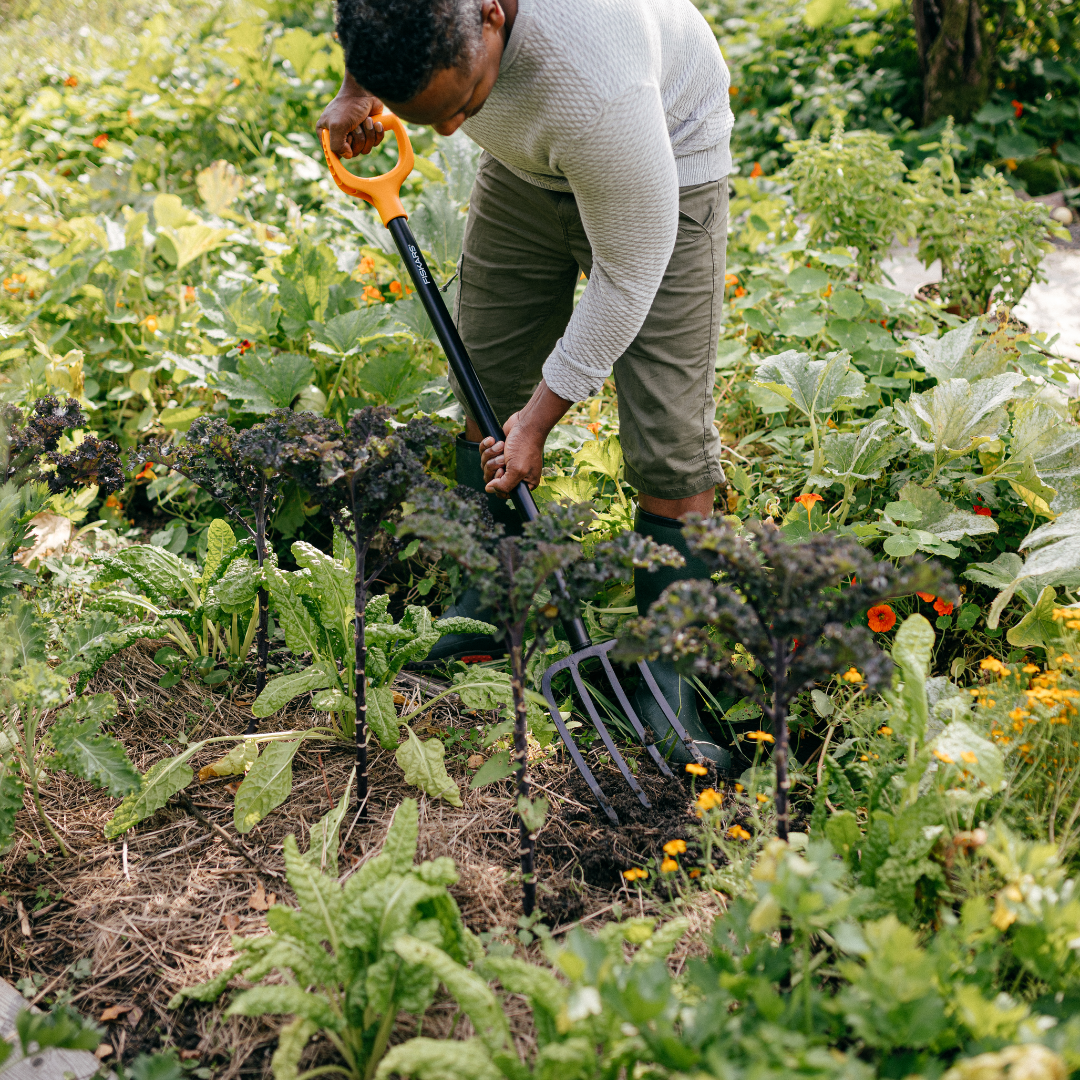
This makes a garden fork one of the most useful garden digging tools for preparing established beds or opening up ground before adding compost. Work the soil in manageable sections rather than forcing the fork through stones, thick roots or extremely dry ground.
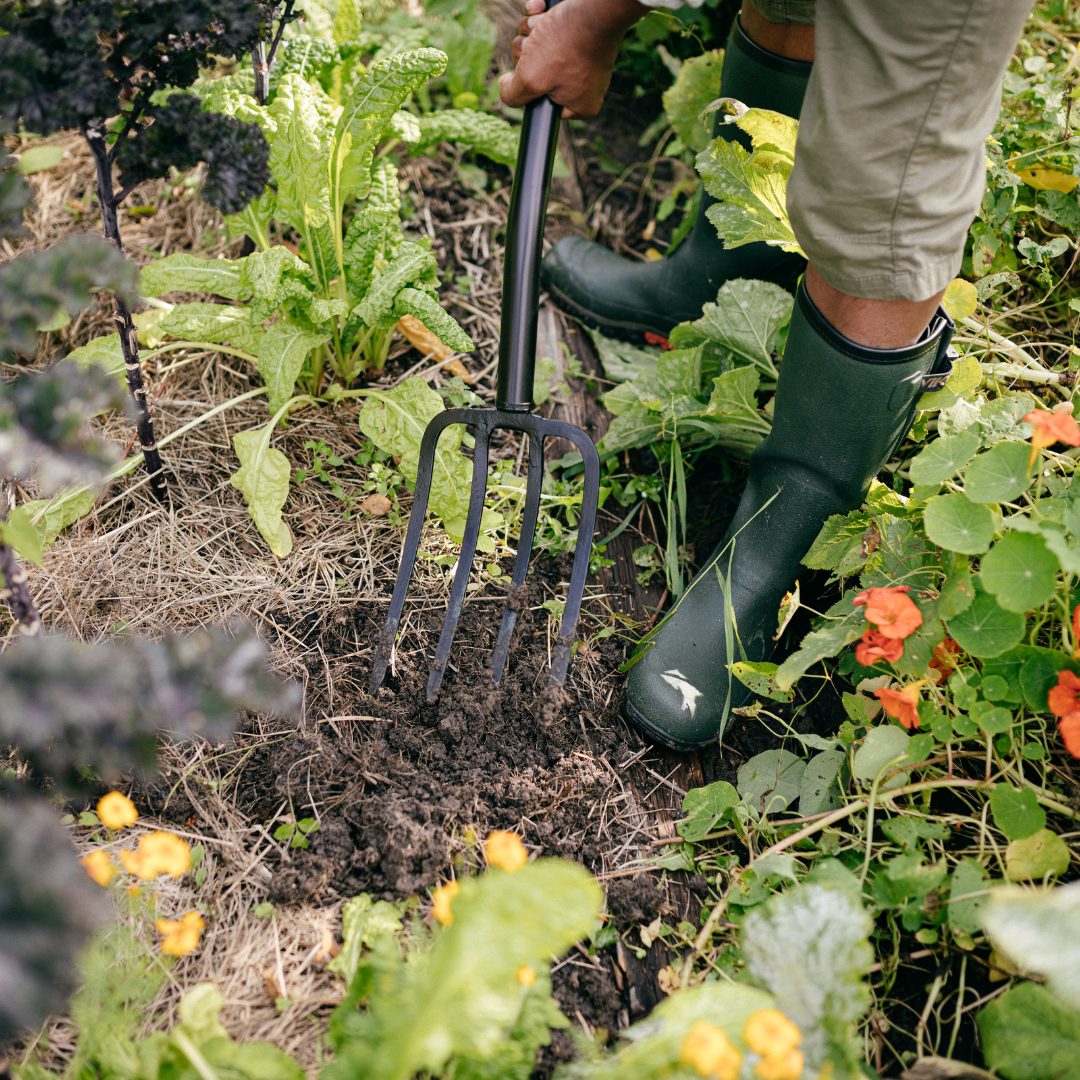
Good soil aeration creates spaces that allow air and water to move through the ground more easily. A garden fork can be pushed into compacted beds and gently rocked backwards and forwards to open the soil without completely turning it over.
The same method can help with small, compacted lawn areas. Larger lawns or severe compaction may require specialised aeration equipment, while other tools for maintaining lawns can support regular trimming, edging and weed control.
Garden forks work well alongside other soil preparation tools when creating healthier conditions for new plants. They can loosen the ground, mix in compost and help break apart large clumps before planting begins.
A fork can also lift established plants and root vegetables with less cutting than a solid blade may cause. Once the ground is prepared, the right tools for ongoing plant care can help maintain flowers, shrubs and other garden growth.
The spaces between the tines allow a garden fork to lift and turn loose materials such as compost, mulch and manure. This makes it useful for mixing a compost heap and distributing organic matter across garden beds.
After use, remove any soil or organic material caught between the tines. Allow the tool to dry before storing it in a sheltered area to help protect its metal components and maintain its condition.
A garden fork is used to loosen and turn soil, mix in compost, lift root crops and break apart compacted ground. It can also move loose materials such as mulch and manure.
The terms are often used interchangeably for a strong, full-length fork designed to work the soil. A digging fork usually has short, rigid tines suited to firm or compacted ground.
Yes, a garden fork can aerate small or lightly compacted lawn areas. Larger lawns or severe compaction may need a core aerator.
Push the tines into slightly moist soil and gently rock the handle to loosen it. Avoid forcing the fork against stones, thick roots or very dry ground.
Remove soil and plant material from the tines after use, then wipe or rinse the tool clean. Dry it before storing it under cover to reduce prolonged exposure to moisture.
Since 1649, Fiskars has championed the ageless principles of high quality, intuitive and sustainable design. Fiskars empowers every gardening enthusiast to follow their passion with timeless yet innovative design.
Available in more than 60 countries, Fiskars products solve everyday problems, making daily home, garden and outdoor projects easier and more enjoyable through superior performance and design.

Sign up for exclusive offers, original stories, events and more.